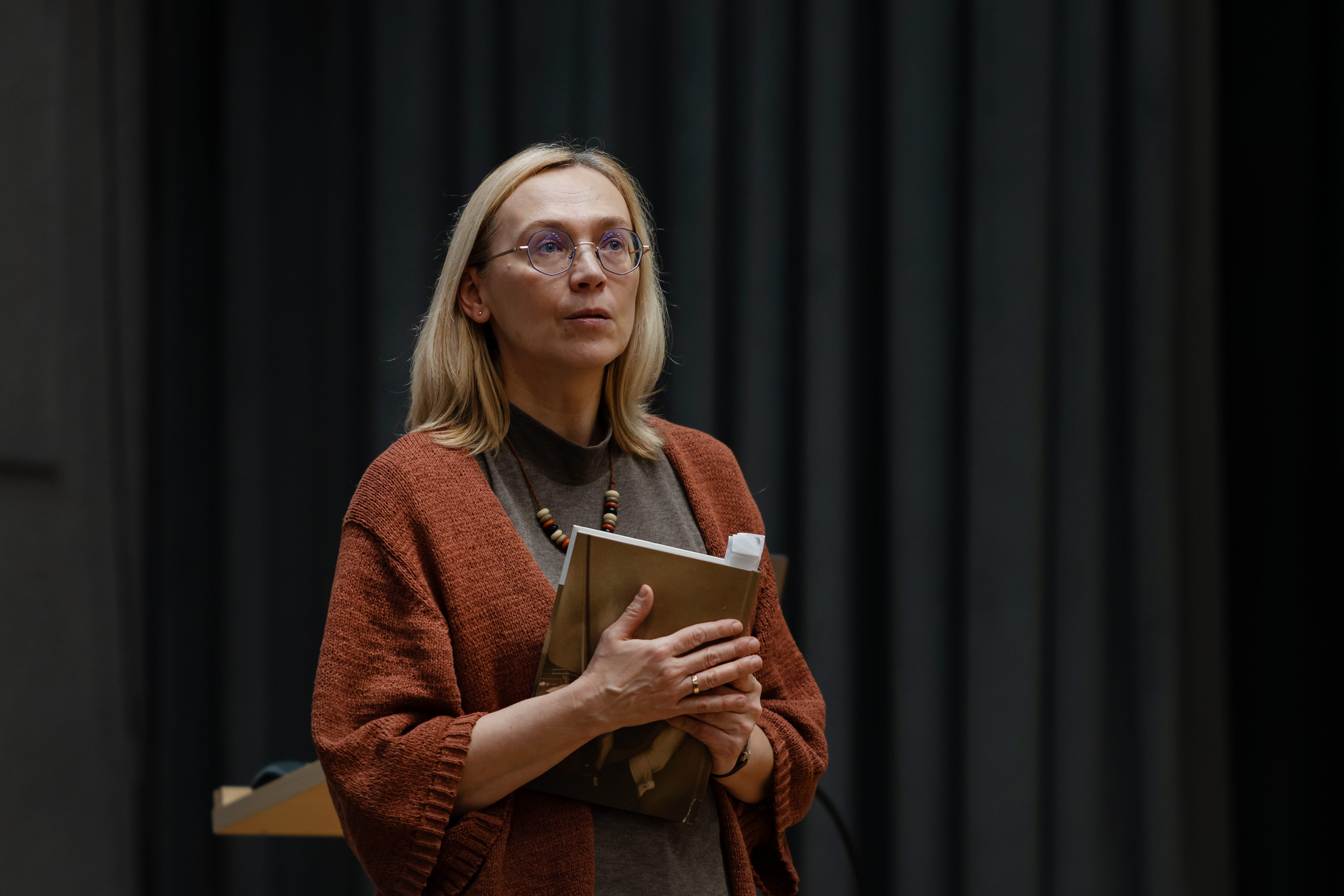
Monograph on Violinist Danielius Pomerancas Presented at “Laiptai” Gallery
Organised by Šiauliai Culture Centre.
Danielius Pomerancas (1904–1981) was a violinist regarded as one of the pioneers of jazz and popular music in Lithuania. He studied music in Berlin and Vienna, and upon returning to Kaunas, formed an ensemble that performed at Konrad’s Café. During the Second World War, the violinist was imprisoned in the Kaunas Ghetto, where he and other musicians established an orchestra of approximately forty members. He was later imprisoned in the Stutthof and Dachau concentration camps. Having survived the war, Pomerancas performed at the Kaunas Operetta Theatre and with the Lithuanian State Symphony Orchestra.
The two-part monograph explores the artist’s biography, which was profoundly shaped by the dramatic events of the 20th century and changes in political regimes. The first part reconstructs episodes from the lives of the violinist and his family members. It is based on archival materials, the interwar press and recollections of people who knew Pomerancas personally.
The second part of the monograph consists of seven thematic conversations with Pomerancas’ daughter, violinist Danutė Pomerancaitė-Mazurkevich, who was born in the Kaunas Ghetto. As a young child, she was rescued from the ghetto by opera soloist Kipras Petrauskas and his wife, actress Elena Žalinkevičaitė-Petrauskienė, who were later recognised as Righteous Among the Nations. The conversations reveal personal portraits of the Pomerancas family and their rescuers, the Petrauskas family, as well as the key circumstances and individuals that shaped the violinist’s life and artistic career. They also explore her most significant experiences as a performer and educator, alongside her reflections on identity.
This gathering provided an opportunity to remember a musician whose life and family were deeply affected by the historical upheavals of the 20th century. In the monograph, archival sources and personal testimonies complement one another, offering a perspective on the past through the story of a single family. This connection between reality and memory is also reflected in the book’s title.
Kamilė Rupeikaitė is a Senior Research Fellow at the Lithuanian Culture Research Institute, an Associate Professor at the Department of Musicology of the Lithuanian Academy of Music and Theatre, and the author of the monograph “Dialogues: Composer Anatolijus Šenderovas” (2020). Her research interests include music in the Holy Scriptures, multicultural musical contexts and the musical culture of Lithuanian Jews.
The lecture and book presentation at “Laiptai” Gallery formed part of the event series “Cultural Landscape of the Litvaks”. This series invites audiences to explore Lithuanian Jewish culture, its creators, history and heritage through various forms of art and cultural expression. This particular event offered insights into the musical life of interwar Lithuania and the fate of one family.
For further information, please contact: Kristina Alseikė, Event Organiser at the Exhibitions Department of Šiauliai Culture Centre, tel. +370 658 80 507, email: kristina.alseike@siauliukc.lt.
Photos by Darius Ančerevičius.
Atnaujinta: 2026-10-27 14:23