New C. Bechstein Concert Grand Piano Makes Its Debut at Laiptai Gallery
Organiser: Šiauliai Cultural Centre.
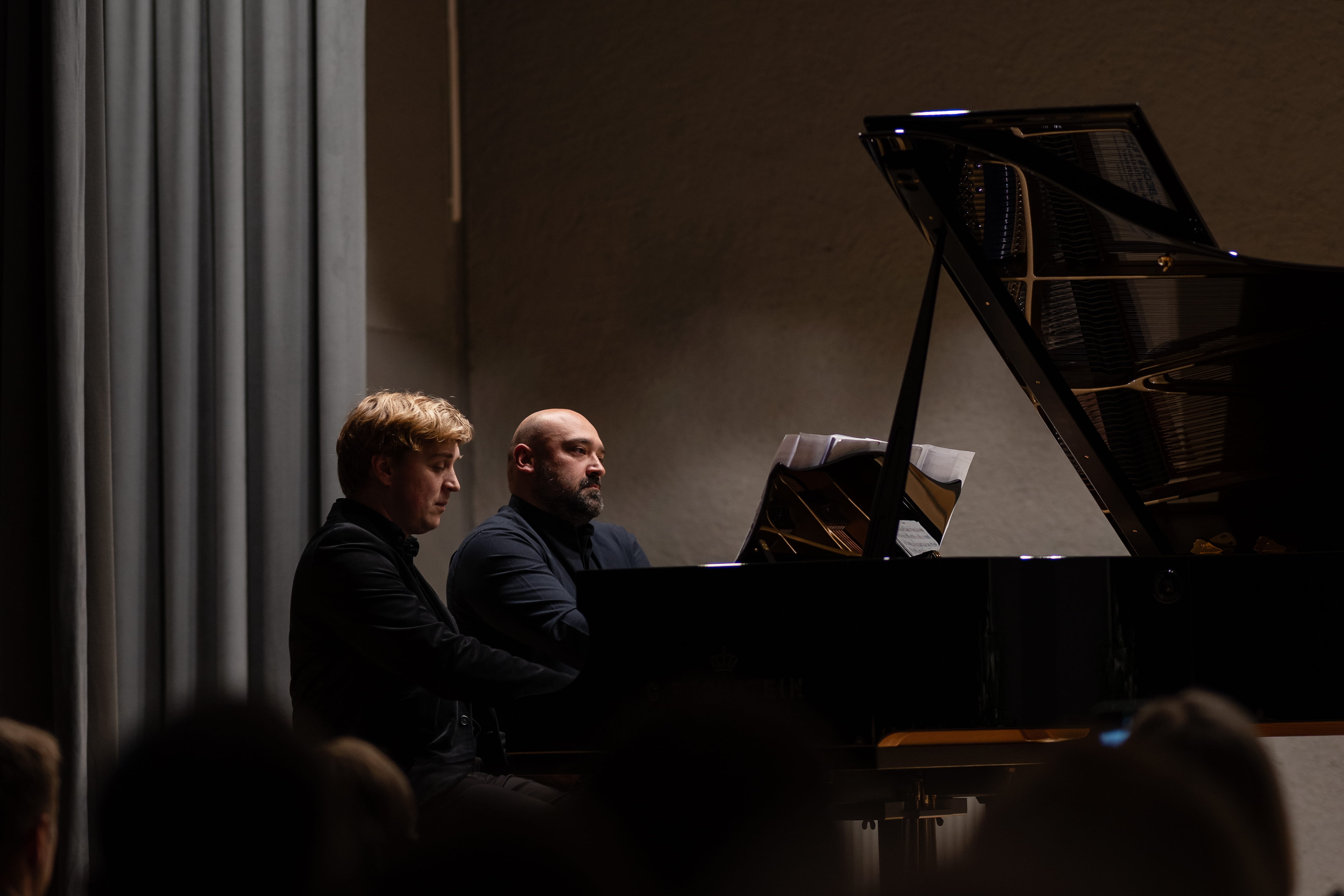
The C. Bechstein Concert D 282 unveiled at Laiptai Gallery is one of two new pianos acquired by the Šiauliai Cultural Centre this autumn. The instruments were purchased with funding from Šiauliai City Municipality to mark the city’s 790th anniversary and the 80th anniversary of the Šiauliai Cultural Centre. The 2.82-metre concert grand piano, manufactured in Germany, is intended for Laiptai Gallery, while the second instrument, a C. Bechstein Academy A 190, has been installed in the Chamber Hall of the Šiauliai Cultural Centre. The professional concert grand piano enables performers to explore an extensive dynamic and tonal range, from the most delicate pianissimo nuances to powerful musical climaxes.
“The new C. Bechstein is much more than just another purchase for us. The true value of a piano becomes apparent when a performer sits down to play it and the instrument becomes part of a live musical encounter. That is why the most important thing about this concert is not to talk about the piano, but to hear what it can do and discover the musical colours it brings to the gallery,” said Deimantė Bačiulė, Director of the Šiauliai Cultural Centre, at the beginning of the concert.
Johan Randvere and Justas Šervenikas, who performed the inaugural concert on the new instrument, have been making music together since 2019. J. Randvere is an Estonian pianist who actively performs as a soloist and chamber musician both in Estonia and internationally, including an appearance at Carnegie Hall in New York. J. Šervenikas is a Lithuanian pianist who performs as a soloist and chamber musician in Lithuania and abroad. Music written for piano four hands and two pianos forms an important part of the duo’s repertoire.
The concert opened with Juozas Naujalis’ “Svajonė” (“The Dream”), marking the first time the new C. Bechstein was heard by the Šiauliai audience. The programme continued with one of Franz Schubert’s most remarkable works for piano four hands – the Fantasy in F minor, Op. 103, D 940. This substantial Romantic composition is distinguished by its cohesive musical narrative, in which lyrical passages intertwine with dramatic and technically demanding episodes.
The programme also featured Piano Sonata No. 1, composed in 1985 by Estonian composer Erkki-Sven Tüür. Its three movements – “Presto”, “Lento”, and “Allegro. Con moto” – bring together contrasting musical moods, combining energy, inner tension, and more meditative passages. The evening also included music by Arvo Pärt, one of Estonia’s most internationally renowned contemporary composers.
A different dimension of the new piano’s sound was revealed through “Petite Suite” by French composer Claude Debussy, written for piano four hands. The work consists of four distinctive movements – “En bateau” (“In a Boat”), “Cortège” (“Procession”), “Menuet” (“Minuet”), and “Ballet”. Its delicate musical textures, colourful harmonies, and constantly shifting moods allowed the audience to discover an entirely different palette of tonal colours.
The concert programme thus brought together music by Lithuanian, Austrian, Estonian, and French composers – from the lyricism of J. Naujalis and the Romantic expressiveness of F. Schubert to contemporary Estonian music and the characteristic colour and subtlety of French compositions. Works from different periods and musical traditions also served as a test of the new piano, allowing the audience to experience the breadth of its expressive capabilities.
An important part of the evening was J. Šervenikas’ interaction with the audience. The pianist introduced the pieces in a lively and humorous manner, going beyond their titles or basic biographical facts about the composers. Between performances, he shared stories about the circumstances in which the works were created, their character, the composers’ intentions, and various anecdotes associated with the music. This close dialogue between the performer and the audience helped listeners experience the programme not merely as a sequence of individual compositions, but also gain a deeper understanding of their context.
J. Šervenikas also drew attention to a meaningful coincidence: the concert took place on 15 November, which is celebrated in Lithuania as Philanthropy Day. Speaking about the occasion, the pianist reflected on the relationship between philanthropy and culture, highlighting the important role that patrons have played throughout history in supporting the arts and creating opportunities for culture and creativity to flourish.
J. Šervenikas’ connection with the gallery’s new instrument began well before this concert. During the Šiauliai Cultural Centre’s public procurement process for the pianos, the quality of the proposed instruments was assessed by a three-member expert committee consisting of pianist Justas Šervenikas, pianist, educator, and Doctor of Arts Jurgis Aleknavičius, and piano technician and tuner Darius Narmontas. The experts tested instruments from different manufacturers in Germany and the Czech Republic, evaluating keyboard responsiveness, tuning stability, dynamic and tonal range, as well as sound duration and quality. This time, therefore, J. Šervenikas sat down at the new C. Bechstein not as an expert assessing its qualities, but as a performer.
Speaking to the audience, the pianist expressed his appreciation for having had the opportunity to contribute to the selection of the new piano and voiced his hope that more high-quality concert instruments would become available not only in major cities. He also recalled having previously performed at Laiptai Gallery with J. Randvere, making their return and the opportunity to play the new instrument particularly meaningful. The performers aimed to demonstrate the piano’s diverse capabilities and make piano music more accessible to listeners who may not regularly attend this type of concert.
At the end of the concert, the audience rose to its feet and rewarded the performers with enthusiastic applause. In response to the standing ovation, the pianists performed Maurice Ravel’s “Le jardin féerique” (“The Fairy Garden”) from his suite for piano four hands “Ma mère l’Oye” (“Mother Goose”) as an encore.
The concert on 15 November marked the beginning of the new C. Bechstein Concert D 282’s musical life at Laiptai Gallery. From now on, the instrument will play an important role in professional piano and chamber music concerts held at the gallery, offering residents and visitors of Šiauliai many more opportunities to experience its sound through performances by outstanding musicians.
For further information, please contact: Deimantė Bačiulė, Director of the Šiauliai Cultural Centre, tel. +370 671 42 889, email: deimante.baciule@siauliukc.lt.
Photos by Darius Ančerevičius.
Atnaujinta: 2026-11-17 14:40