The Baltic network of cultural centres (BNCCA): the role of cultural centres in societal resilience discussed in Estonia
The project was initiated and is administered by the Association of Lithuanian Cultural Centres, with partners including the Association of Latvian Cultural Centres and the Association of Estonian Cultural Centres. The project has received network funding from the Nordic-Baltic Mobility Programme for Culture to establish the Baltic Cultural Centres Network project “The Power of Culture”. “The Power of Culture” aims to strengthen cooperation among cultural centres across the Baltic states, encourage the exchange of professional expertise, and promote a shared dialogue on cultural policy within the Baltic region.
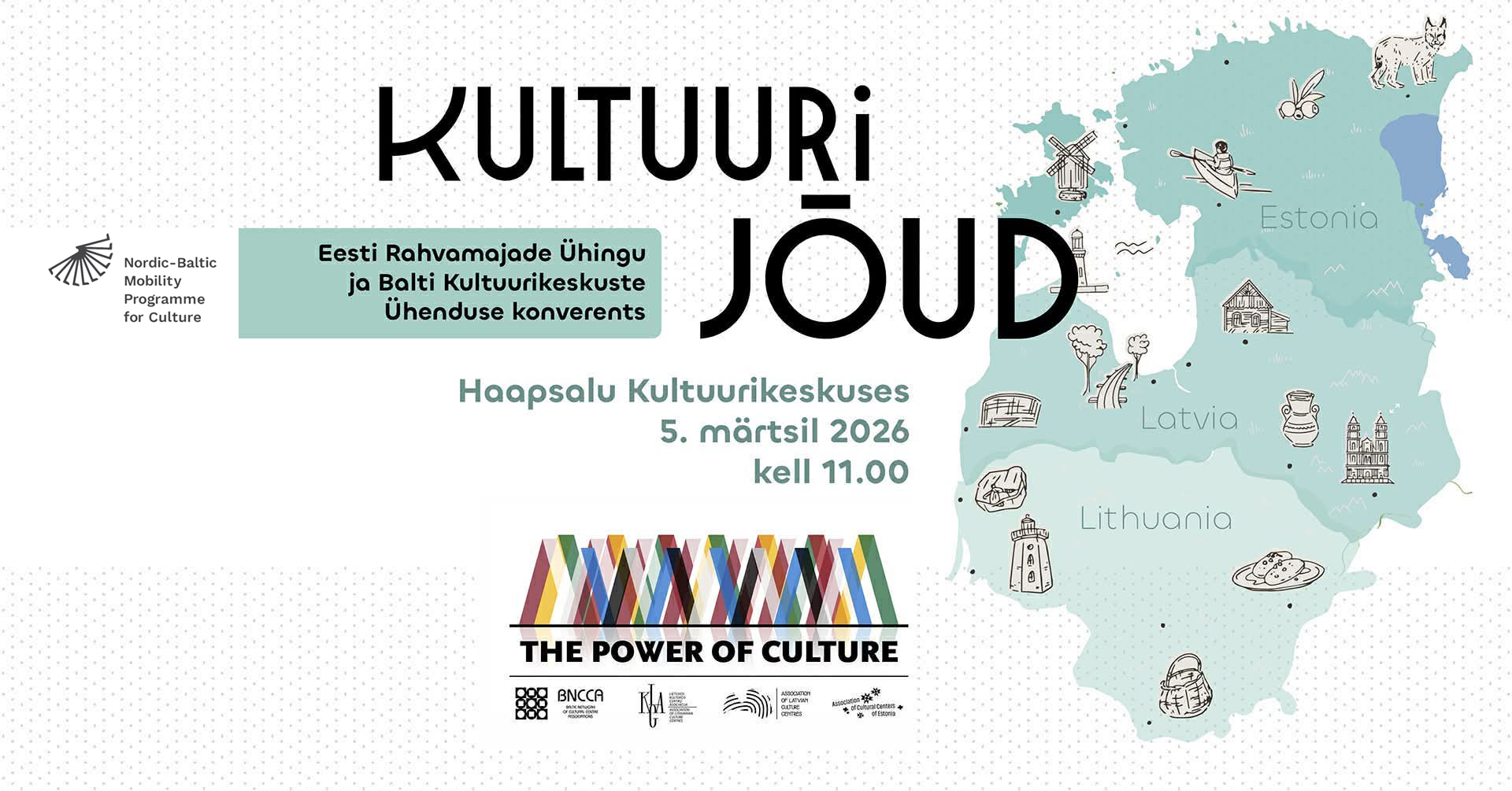
The meeting began at the Šiauliai Cultural Centre, where Lithuanian project participants shared their experience of international cooperation among Lithuania’s cultural centres and discussed the operational priorities of the Baltic Network of Cultural Centre Associations (BNCCA). Later, the Lithuanian delegation travelled to Estonia, where the Haapsalu Cultural Centre hosted the conference “The Power of Culture,” dedicated to the cultural and societal security. The conference brought together 15 members of the cultural community from each of the partner countries.
The conference was opened by the event moderator Hannes Hermaküla. Welcome remarks were delivered by representatives of the Haapsalu City Municipality and members of the three Baltic delegations. Speaking on behalf of the Lithuanian delegation, Virginija Naudžiūtė, Vice-President of the Association of Lithuanian Cultural Centres, highlighted the vital role of culture in strengthening society: “Culture is not merely a series of events or forms of entertainment. It is a space where individual awareness, values, and the strength of community are shaped. Today, as the world faces growing tensions, the role of culture becomes particularly important – it builds trust, nurtures critical thinking, and helps people feel needed and heard”.
During an intensive day of the conference, presentations and discussions were held under the theme “Culture and Security”. Internal security expert Gert Teder presented insights into the role of communities during times of crisis, while Siim Sukles, a representative of the Estonian Ministry of Defence, spoke about public preparedness and the importance of involving communities in strengthening security processes.
In the session dedicated to delegation presentations, representatives from Lithuania, Latvia, and Estonia addressed current issues facing the cultural sector. Aistė Tuminaitė-Orlauskė, Director of the Žagarė Cultural Centre, delivered a presentation titled “Cultural Centres as Spaces of Resilience: Insights from Lithuania,” in which she discussed the role of cultural centres in strengthening community resilience. When presenting Lithuania’s experience, she emphasized that cultural centres are becoming important hubs for bringing communities together: “Today, cultural centres are more than venues for events – they are places where communities meet, engage in dialogue, and build trust. Through culture, people learn to cooperate, critically assess information, and feel responsible for their community”.
During the conference, a discussion titled “The Power of Culture” also took place, exploring how the cultural sector can contribute to strengthening social cohesion, civic engagement, and democratic values across the Baltic states.
Participants shared examples of good practice, discussed the strategic directions of the BNCCA, and outlined the next steps of the project. Creative workshops were also held, focusing on the future plans of the Baltic cultural centres network and prospects for continued cooperation.
The three-day programme was intensive and enriching. Alongside the working sessions, participants had the opportunity to learn about the rich cultural life of Haapsalu. Guests enjoyed a performance by an Estonian Folk Dance Ensemble, visited the Haapsalu City Gallery, the Epp Maria Kokamägi Gallery, and the historic Haapsalu Episcopal Castle. Conference participants also had the opportunity to explore an exhibition by Egge Kulbok-Lattik, which presents the history of Estonia’s community houses and their role in shaping local cultural and social life.
The next partner meeting of the project “The Power of Culture” is scheduled for 23-25 April 2026, in Palanga (Lithuania). The meeting will continue discussions on the interaction between culture and policy, opportunities for cooperation, and the role of cultural centres in strengthening societal resilience.
Project activities will continue until 30 June 2026.
For more information: Virginija Naudžiūtė, Vice-President of the Association of Lithuanian Cultural Centres, mobile: +370 695 40 994, email: virginija.naudziute@prienaikc.lt.
Atnaujinta: 2026-03-13 09:12