Final Meeting of the “Power of Culture” Project Held in Palanga: Cultural Centres Discuss Awareness, Civic Engagement, and Social Resilience
The initiator and administrator of the project is the Lithuanian Association of Cultural Centres, with partners including the Latvian Association of Cultural Centres and the Estonian Association of Cultural Centres. The project is implemented with funding from the Nordic-Baltic Mobility Programme for Culture. The programme is jointly financed by the Nordic Council of Ministers and the Ministries of Culture of the Baltic States. The Palanga Cultural Center contributed to organizing the final meeting, while the event was partially funded by the Palanga City Municipality.
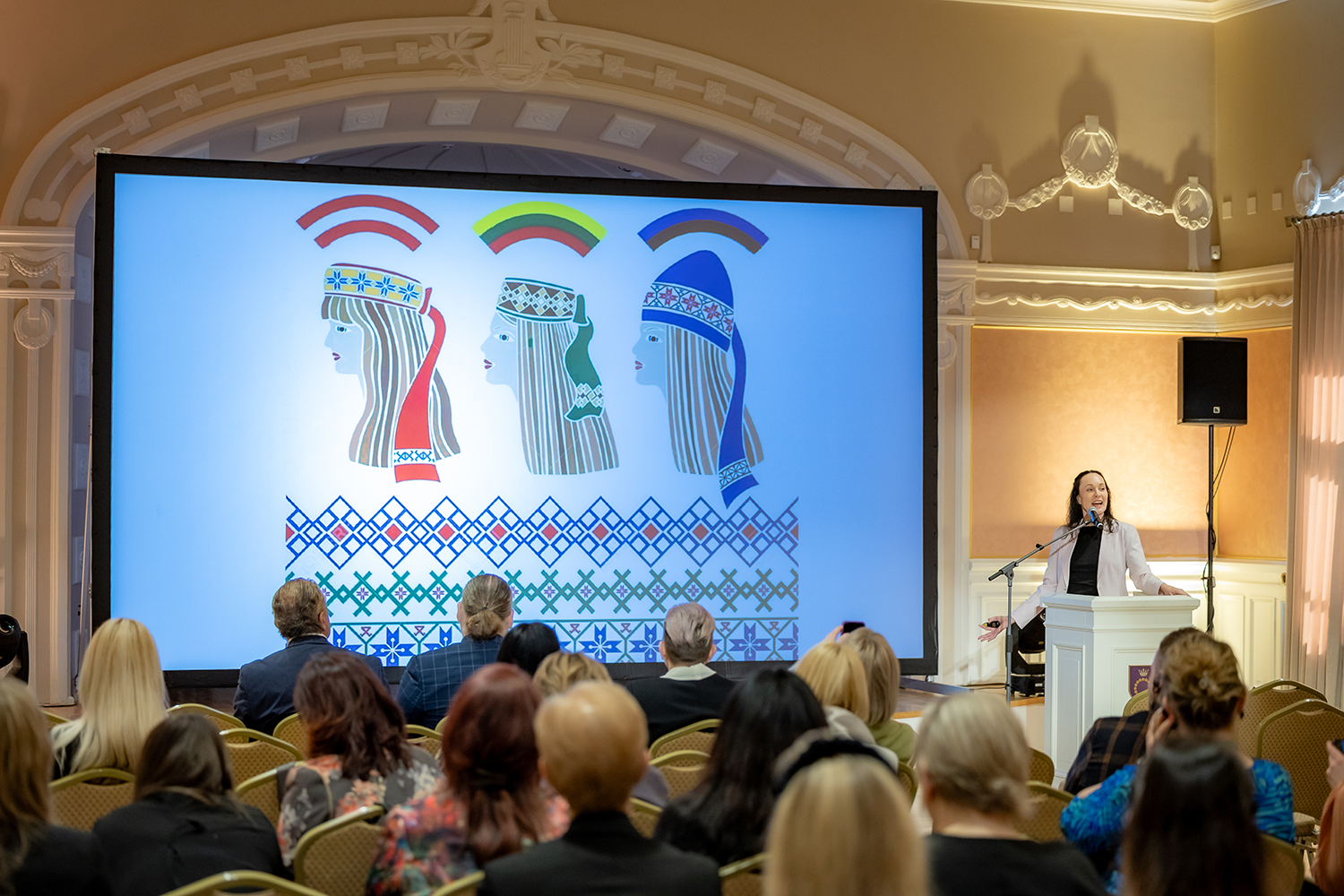
The main and most intensive day of the meeting took place on April 24, 2026, at the Palanga Cultural Center (Kurhaus), where the conference “The Psychological Influence of Culture on Human Awareness and Civic Engagement” was held. The conference brought together not only delegations from the project partners, but also representatives of the wider Lithuanian cultural centre community.
The day began with a creative laboratory session for project participants – a project reflection during which the impact of the project, implementation results, and future directions for the development of the Baltic Cultural Centres Network were discussed.
During the second part of the conference, participants were welcomed by Nerijus Stasiulis, member of the council of the Palanga City Municipality, who emphasized the importance of culture in today’s context, stating that “today, when the world is full of unrest, culture remains the force capable of creating and spreading peace within communities.” He also highlighted that “the more actively we participate in decision-making, the stronger our influence will be,” and that “culture and politics, working together, can become a real tool for change.”
Welcome remarks were also delivered by Romas Matulis, president of the Lithuanian Association of Cultural Centres and director of the Plungė Cultural Center, who noted that “the strength of a state is culture, and the strength of culture is the human being.” He added that “this project already marks an important beginning – an opportunity for the Baltic States to speak with one voice, coordinate positions, and strengthen the common cultural field.”
Lisette Taube, director of the Estonian Association of Cultural Centres, emphasized that “cultural centres function as a kind of safety network and emotional compass, helping people feel part of a community, especially in uncertain times.”
Latvian representative Ēriks Laime-Babris, director of the Ķekava Parish Cultural Center, highlighted the importance of regional cooperation, stating that “cooperation at the Baltic level is especially important,” because “only by acting together can we strengthen the cultural sector, attract funding, and ensure its sustainable development.”
The conference presentation session addressed current issues in the cultural sector. Deividas Jučas, cultural activity manager at the Palanga Cultural Center, presented the report “The Power of Culture in Strengthening Identity and Social Resilience: The Case of the ‘Palanga St. George’s Festival’ Event.” Anni Sikk, specialist for culture and communities at the Estonian National Culture Centre, introduced the topic “Living Culture as a Driver of Human Awareness and Active Civic Engagement in Communities.”
Latvian representatives – Liene Kubilius, director of the Northern Riga Cultural Association; Nadežda Čerpaka, head of the Culture Department of the Dobele Municipality; and Kristīne Suļžanoka, project manager at the Northern Riga Cultural Association – analyzed “The Psychological Influence of Culture on Human Awareness and Civic Activity.”
In the presentation “Cultural Centres: Light or Heat?”, insights were shared by Rūta Gudmonaitė. Aušra Paukštytė, member of the European Union Council Presidency Group at the Ministry of Foreign Affairs of the Republic of Lithuania, delivered the presentation “Cultural Dissemination as an Expression of Civic Identity.” Juratė Stankuvienė, director of Mediasokas and member of the Foxes Unit of the Lithuanian Sun Union, presented the topic “Culture: The Power to Protect and the Power to Destroy – What Do You Choose?”
The conference also introduced the study conducted by the Lithuanian Association of Cultural Centres titled “The Attitude of Cultural and Arts Workers in Lithuanian, Latvian, and Estonian Cultural Centres Toward the Influence of Culture on National Security,” presented by Jurga Keršienė, director of the Varėna Cultural Center.
In the evening, the final concert of the project, “From Generation to Generation – The Power of Baltic Culture,” took place at the Palanga Concert Hall, becoming the symbolic culmination of the entire project and a living testament to cultural continuity. The concert brought together the Lithuanian cultural centre community, residents of Palanga, and delegations from Latvia and Estonia.
The central theme of the concert programme was dialogue between generations – performers of different generations appeared together on stage, revealing the living transmission of tradition from one generation to another. More than 200 performers from Palanga, Vilnius, Klaipėda, Kretinga, and the Šilalė district participated in the concert. The programme became not only an artistic performance, but also a symbolic message about Baltic unity, cultural continuity, and culture’s ability to connect generations, communities, and nations.
The final highlight of the concert was a dance composition by choreographer Eglė Baltriukienė set to the song “The Baltics Are Awakening” (music by B. Reznikas).
The final meeting in Palanga consolidated the project’s results and marked a new stage – the further development of the Baltic Network of Cultural Centre Associations (BNCCA). Project participants agreed that cooperation will continue, strengthening the role of the cultural sector in society and fostering a shared dialogue on cultural policy in the Baltic States.
Project activities will continue until June 30, 2026.
Photographs by Radvilė Kucevičiūtė and Kamilė Auks.
Information provided by Romas Matulis of the Lithuanian Association of Cultural Centres, mobile: +370 687 30 484, email: romas.matulis@gmail.com.
Atnaujinta: 2026-05-15 08:53