“Patrepsynė” in Šiauliai United Tradition, Dance, and Togetherness for the 20th Time
Organizer – Šiauliai Cultural Center. Funded by the Lithuanian Council for Culture and the Šiauliai City Municipality.
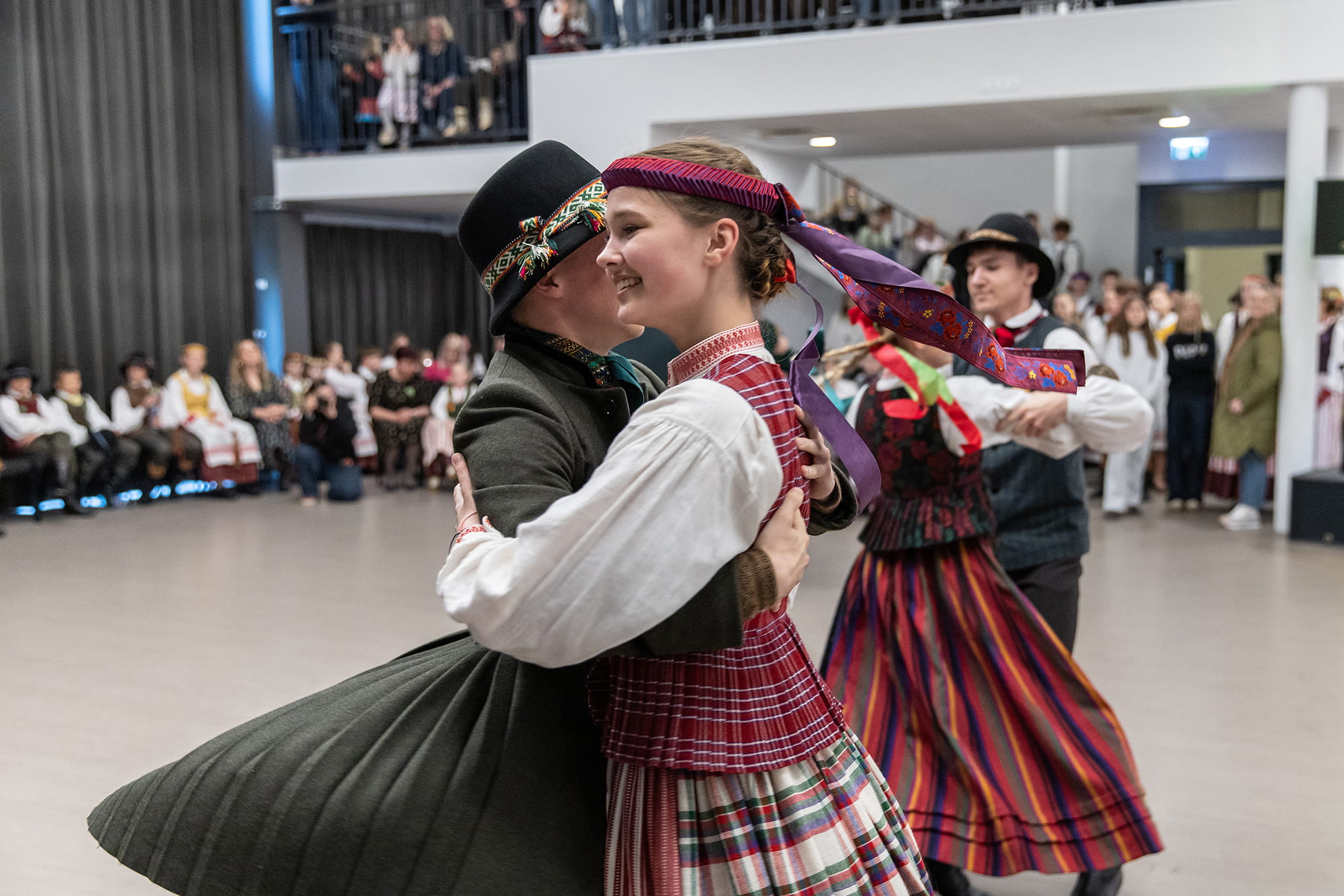
This year, “Patrepsynė” featured representatives from 20 Lithuanian municipalities – nearly one third of all municipalities in the country – making Šiauliai a living centre of folklore dance for one day. A total of 107 pairs from the districts of Akmenė, Alytus, Klaipėda, Kaišiadorys, Kaunas, Kelmė, Kėdainiai, Marijampolė, Panevėžys, Prienai, Radviliškis, Šilalė, Tauragė, Telšiai, and Varėna, as well as the cities of Kaunas, Klaipėda, Panevėžys, and Šiauliai, and the municipality of Neringa, competed in the final. Before the final began, the “Patrepsynė” flag was symbolically raised for the first time near the Šiauliai Cultural Center, marking the beginning of the jubilee event.
The celebration opened with the mandatory but non-competitive group dance “Meilutė”, performed together by all participants, creating a warm and unifying introduction to the event. Throughout the day, live music filled the hall as dancers were accompanied by the instrumental group of the children’s and youth folklore ensemble “Čiučiuruks” from the Telšiai Cultural Center (leader Rita Videikaitė-Macijauskienė) and the instrumental group of the folklore ensemble “Vieversėlis” from the Šiauliai Dainai Music School (leader Arūnas Stankus).
The beginners’ category was the largest this year, with as many as 86 pairs performing the dances “Kukolinis”, “Šuldi ruldi”, “Polka dribsiukas”, and “Kiaulės – grikiūs”. In the advanced category, 14 pairs demonstrated their skills performing “Malūnėlis” with a waltz, “Vengierka” (Lazdijai region), “Skrodelis”, and “Padikatras”. The experienced category featured 8 pairs dancing “Tigri tigri”, “Vengierka” (“Dūs tau, muotin”), “Minjonas”, and “Šiberis”.
In the beginners’ category for grades 1–5, the winners were Evita Legeckaitė and Orenas Vepštas from Šiaulėnai Marcelinas Šikšnys Gymnasium (teacher Džiuljeta Ragauskienė). In the grades 6–12 category, the best performers were Ieva Balčiunaitė and Gytis Čiužauskas from Kaunas Palemonas Gymnasium (teacher Samanta Kateivaitė). In the advanced category, the laureates were Luknė Varžinskaitė and Povilas Balsevičius from the Kaunas Ethnic Culture Centre (leader Austėja Alminaitė). In the experienced category, the highest evaluation was awarded to Kotryna Jogminaitė and Gustas Kėbla from the Šilalė Cultural Center Laukuva Cultural House (leader Olga Jogminienė).
The young dancers were evaluated by a professional seven-member jury: Audronė Vakarinienė, choreographic folklore specialist at the Lithuanian National Cultural Centre (chairwoman of the jury); ethnomusicologist and Doctor of Humanities Gvidas Vilys (vice-chairman); ethnomusicologist Lina Vilienė; Doctor of Social Sciences and choreographer Ramutė Gaučaitė; deputy director for ethnic culture activities at the Lithuanian National Cultural Centre Vida Šatkauskienė; head of the Ethnic Culture Department at the Lithuanian National Cultural Centre Jūratė Šemetaitė; and folklore ensemble leader Alvydas Vozgirdas. The jury evaluated dancers’ technique, musicality, expressiveness, naturalness, and individuality.
All finalists and their leaders received certificates of appreciation and commemorative bags. The best performers of individual dances were awarded diplomas and blankets decorated with “Patrepsynė” symbols, while the laureates received traditional straw garden ornaments created by Šiauliai folk artist Raimonda Kiminaitė, reflecting the spirit of the event and the continuity of folk art.
Over the course of two decades, “Patrepsynė” has become an inseparable part of Lithuania’s folklore dance tradition – a place where the younger generation not only learns dance steps, but also experiences a living connection with tradition, togetherness, and cultural identity. The jubilee “Patrepsynė” once again demonstrated that folklore today lives not in museums or archives, but in the movement, music, smiles, and sincere togetherness of young people.
Diploma winners.
More photos:
Šiaulių kultūros centras Facebook photo gallery
Photos by Rolandas Parafinavičius and Darius Ančerevičius.
Information provided by Aušra Brijūnienė, Head of the Amateur Arts Department at the Šiauliai Cultural Center, tel. +370 655 25 527, email: ausra.brijuniene@siauliukc.lt.
Atnaujinta: 2026-05-15 09:09